What We Talk About When We Talk About Chili
March 20th, 2010 by Scott
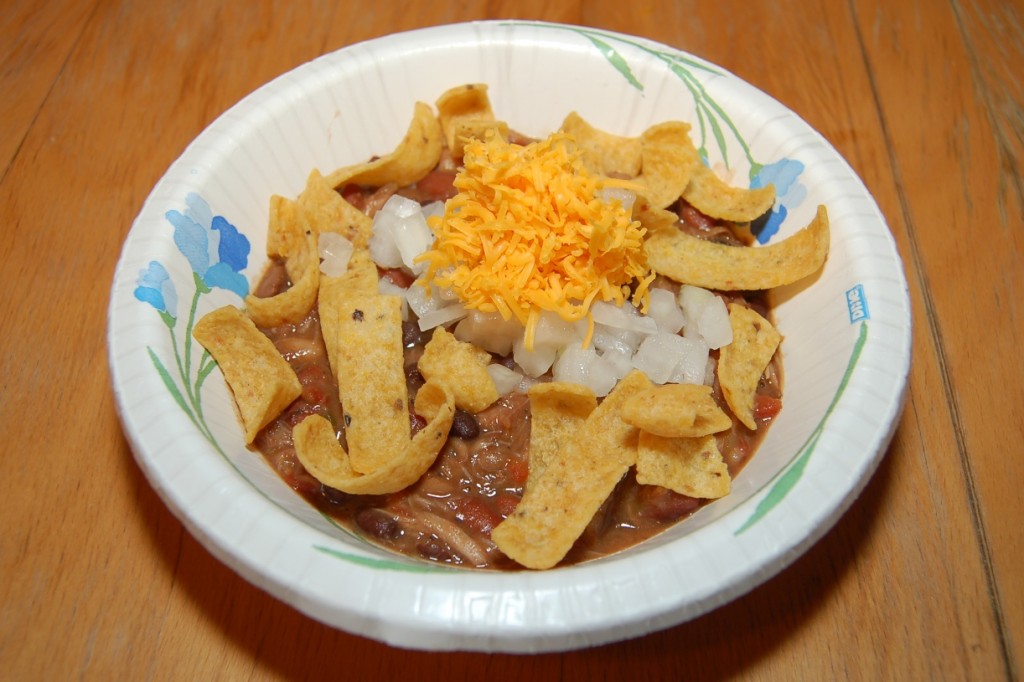
Scenes like this unfold regularly on stage and screen, usually in hospital or police dramas. Someone in an official uniform, a handsome but somber-faced physician or a dutiful detective, has been tasked with issuing news that no family member ever wants to hear: There has been a horrible tragedy, and nothing will be the same ever again. It is brutally heartbreaking every time, no matter how many of these same scenes you’ve seen. And as punishingly emotional as they are, they never get old. Recently, I was put into a similar situation, having to steel my nerves and muster every ounce of resolve I could to perform this timeless and devastating proclamation.
“I’m sorry,” I said to my friend, “I have some…bad news.”
Continue reading at The Faster Times
Meat Me At The Super Beauxl: A New Orleans Native Reflects On Football and Food
February 5th, 2010 by Scott
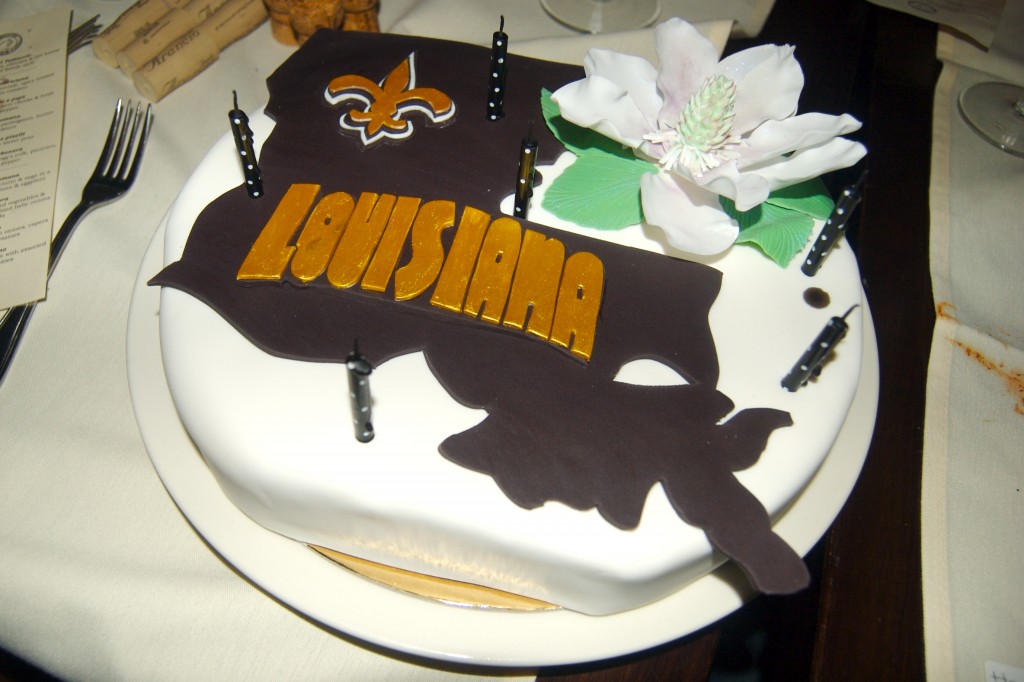
Making friends with an exceptionally talented specialty pastry artist, I’ve come to know, is always a good thing to do. If you haven’t befriended one yet — like my pal Melissa Torres, aka Cake Hero — I highly recommend it. A couple of years ago, I trusted her to create my birthday cake, and boy howdy did she deliver: A giant, pink pig’s head with edible fondant ears, big black Xs over the eyes, and, in its long snout, a wax apple that served as the candle. And when we cut it open? You guessed it: red velvet cake. It was gruesomely fun, not to mention tasty. So, this past year I again decided to employ my friend and her considerable talents to craft me another exquisite birthday creation. Only this time, I wanted it to be a surprise. I emailed about fifty of my friends, and told them to take whatever they knew about me, for good or ill, and get in touch with Melissa with ideas and suggestions for what they felt was the perfect Scott Gold cake, something that summed me up in one lovingly baked and frosted package. Given how much they knew, I couldn’t help but worry a little bit, but I was willing to give Melissa the benefit of the doubt…
Continue reading at The Faster Times
Bourbon and Barbecue: The Ultimate BFF Pair
January 8th, 2010 by Scott

There’s I remember from my youth: Two ranch hands are hanging out on the corral, snacking, when one of them, in an inept attempt to mount his steed, flips over the saddle and spills his treat. “My chocolate!” he laments, to which the other counters, “is in my peanut butter!” It’s not long before the two men realize that, as in the case of Newton’s apple, Archimedes’s bathtub, and Alexander Flemming’s famous mold, they’d landed in the lap of genius by way of pure serendipity. Yes: Chocolate! Peanut Butter! Gadzooks, why didn’t anyone think about combining these things before?!?!
In the land of meat and drink, there are pairings that seldom fail to please: A robust Cabernet with a thick NY strip; bacon and eggs with coffee; spicy Texas-style chili with cold beer; a glass of sweet Sauternes and seared fois gras. I love all of these, deeply and with gusto. However, for me the ultimate pairing of beast and beverage, without a doubt, is bourbon and barbecue…
The New Orleans Po-Boy Festival: A Rich Day for a Poor Boy
December 4th, 2009 by Scott
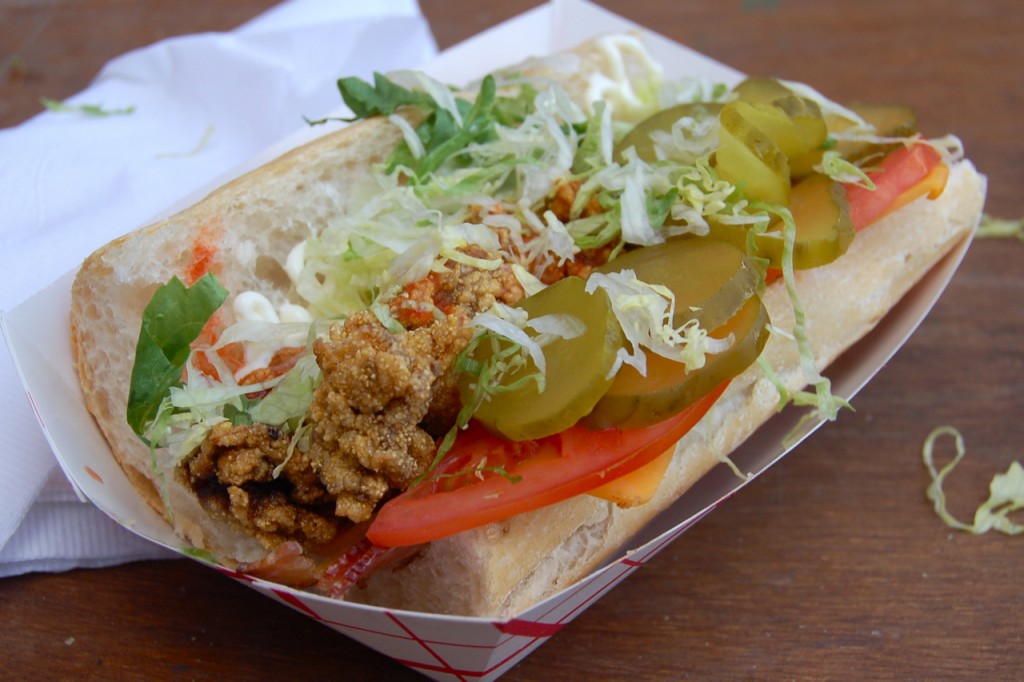
Over the years, I’ve been implored by a number of earnest do-gooders to become part of their organizations, to join hands, fight the good fight and help make the world a better place. Save Lake Pontchartrain. Save the Wales. Ban the Nukes. Nuke the Wales. Pave Lake Pontchartrain. And so on. But never before has a cause struck me so deeply, so frighteningly close to the bone, as the one I discovered last year, just before Thanksgiving:
Save Our Sandwich…
Happy Turkey (Stuffed With Duck, Stuffed With Chicken) Day!
November 23rd, 2009 by Scott
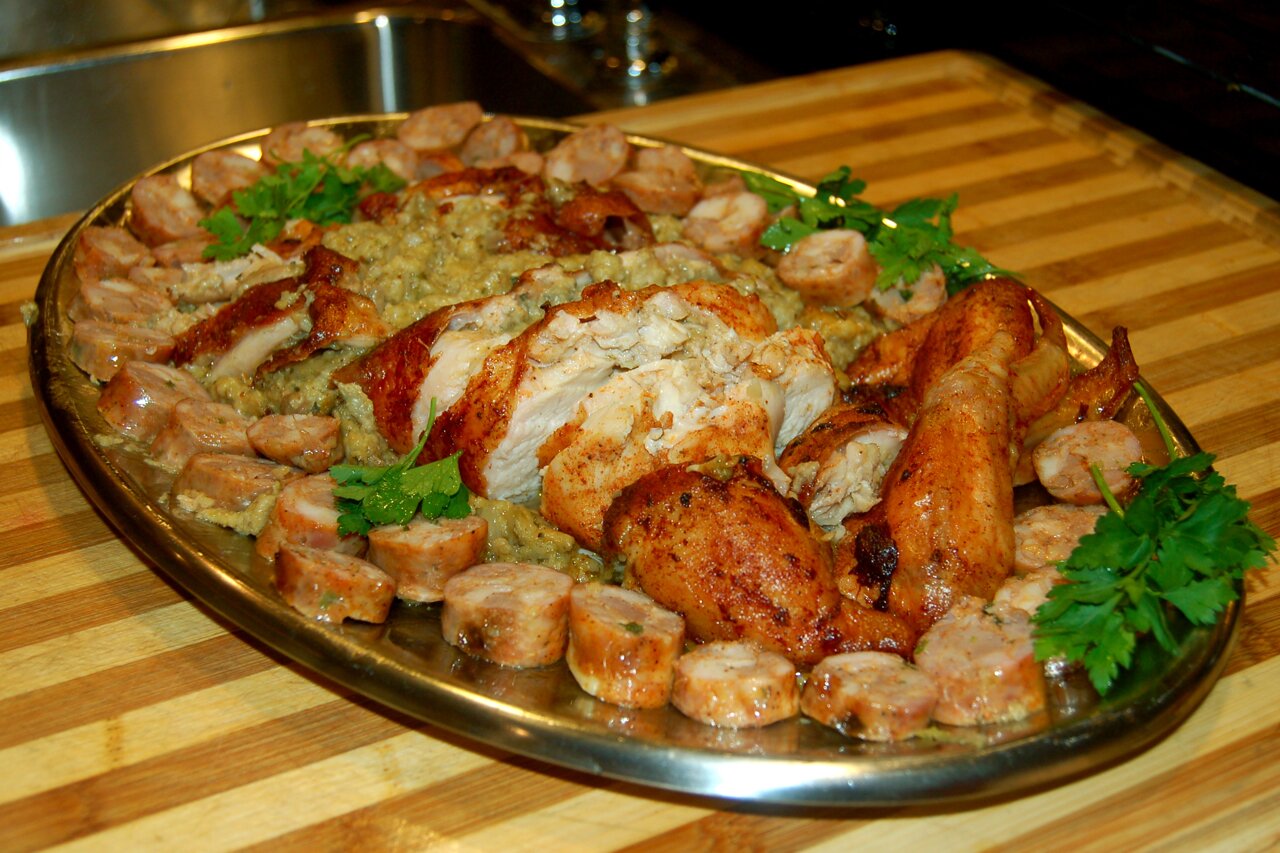
It probably wouldn’t take a rocket surgeon to figure out that Thanksgiving is easily my favorite holiday of all holidays. It’s been that way for years. There are numerous reasons for this: First, there’s not having to wear a tie and drag oneself to religious services. In fact, there’s no religious obligation at all, unless you consider football a religion. It’s pretty difficult to find qualms with a holiday that’s centered around thankfulness, family, and gorging oneself on turkey, stuffing, sweet potatoes (marshmallow topping is a vegetable, right?), and wine so fully that passing out on the carpet — the older gents in my family claim their sofa and easy chair birthrights — isn’t just accepted, it’s expected. Most holidays do have a culinary component, minus the ones where fasting is obligatory, in which cases the absence of food serves as a painful reminder of that day’s holiness and gravity. Not so Turkey Day, a glorious occasion during which full-on, no-holds-barred gluttony is the only way to show appreciation for life’s bounty. Beautiful.
In Which I Solve This Ground Beef E.Coli Problem for Good
October 23rd, 2009 by Scott
It started a couple of weeks ago, subtly, just before waking up on a rainy Saturday morning. I couldn’t tell what it was, exactly, but I didn’t feel quite right. My skin seemed to be a little sensitive to my bedsheets, and I felt a little flushed. Not long after, my joints and muscles started to ache. By the time I rose and put myself in the shower, I knew for certain that I was coming down with something. Little did I know that it was coming down on me. And hard…Continue reading at The Faster Times
Meat and Booze: The Recipe for Happiness?
October 9th, 2009 by Scott

A friend recently forwarded me the above infographic, a nifty little chart illustrating some of the larger and smaller meat consumers in the world, and exactly how much animal flesh we devour (or shy away from) per capita every year. According to the fine folks at GOOD:
An increase in the consumption of meat is directly correlated to an increase in a country’s economic development. As a country becomes richer, its citizens generally eat more meat, a much denser source of protein than is available in poorer countries. But the range of the amount of meat eaten in different countries around the world is truly astounding, from being barely enough for a few hamburgers to the weight of several people. This is a look at which countries are eating the most meat every year, on a per capita basis, and which are eating the least.
It’s a slick graphic, not necessarily political, but one of those images that pops up on the Internet to get your gears turning upstairs. I particularly enjoyed the way the authors gave us a frame of reference by listing the average weight of everyday objects, then totaling them up for us (apparently, I ate a pig, twenty-five chickens and a hot dog last year)…
The KFC Double Down: This Is Why The Terrorists Hate Our Freedom
September 25th, 2009 by Scott

Some weeks ago, I was startled by a surging news item that I thought couldn’t possibly be real. There was this video — a YouTube video, in fact, and we all know how reliable those tend to be — that someone took of a television advertisement. It’s grainy and the sound is high-pitched and tinny, but still, there it was: If this ad was to be believed, Kentucky Fried Chicken was now going to sell a bacon and cheese sandwich that featured two thick slabs of fried chicken instead of bread. They call it the “Double Down.” I assumed the name to be a playful take on what happens to your lifespan after eating one of these monstrosities. It was outrageous. It was hilarious. It couldn’t honestly be real…could it? I was dubious, but then again, this is KFC we’re talking about here. This is the same restaurant chain that comic Patton Oswalt scathingly lampooned, likening their most popular dish — a tub filled with seemingly every KFC menu item covered in cheese and gravy — to a “failure pile in a sadness bowl.” But a bowl of food I can understand, if not order for myself. A mountainous double fistful of fried chicken, bacon, cheese and sauce, on the other hand, seemed so egregious as to defy human comprehension…
Playing With Your Meat: The Lamb Merguez Cupcake
September 3rd, 2009 by Scott

Every summer since I was a toddler, my family has spent a week at the beach. Though the location has changed over the years — Destin and Perdido Key, Florida; Gulf Shores, Alabama — it’s always been on the beautiful Gulf Coast, with sand as white and fine as confectioner’s sugar, brown pelicans skimming over the water looking for a meal, and seafood and produce so fresh it was either caught or pulled from the ground the same day we eat it. Yes, the beach is great, even for a frog-belly-white gentleman such as myself, but it’s always the food I’ll remember, and rightfully so. To say that my family cares about food is kind of like saying the Manning family cares about football. Serious understatement. In fact, this past year we managed to fill two cars to the brim for our one week vacation, and it wasn’t until we’d arrived at our destination that I discovered we’d packed significantly more refrigerator and pantry provisions than actual luggage. Hey — we can wear the same swimsuit day in, day out, but we’re not going to eat the same meal twice, not if we can help it…
Hot Dog Day Afternoon
August 21st, 2009 by Scott


There must be something in the air. Or maybe the water. Whatever it is, we here at The Faster Times food section seem to have gone a little hot dog crazy lately. Take, for instance, Street Foods correspondent Sarah Karnasiewicz’s recent post about the Yankee Hot Dog Trail, in which she muses, “Looking back on the summer, I realize I’ve already devoted an unequal percentage of this real estate to the subject of hot dogs. And here I go again! Whats behind my obsession? Maybe I still have the tastes of a 10 year old.”
I’m pretty sure I know what’s behind your obsession, Sarah, and I don’t think it has anything to do with an immature palate (you enjoyed calf’s spleen with me, remember?). There are larger factors at work here, without question. First, I don’t know if everyone’s noticed, but it’s summertime. And a summer without hot dogs is like…well, not much like summer at all…

-
Latest Posts:
-
- Combining Bird’s Nest Soup With Modern Flavors - 2025-11-24